Rarest Washington Quarters : Coin enthusiasts and everyday finders scour pocket change with renewed fervor this January 2026, chasing the rarest Washington Quarters that could turn 25 cents into a windfall.
These 90-year-old icons, minted since 1932 honoring George Washington, hide treasures in low-mintage dates, doubled dies, and overmintmarks amid a booming numismatic market.
From garage sales to grandma’s jar, stories of six-figure discoveries keep the hunt alive under President Trump’s collector-friendly economy.
Birth of a Numismatic Legend
Washington Quarters debuted amid Depression-era hopes, John Flanagan’s portrait capturing the first president’s resolve on the obverse.
Reverse eagles soared until 1998, replaced by states then territories in the 50 States series. Billions poured out, but early Denver and San Francisco runs skimped—1932-D at 436,800 pieces sets the scarcity bar.
Silver compositions through 1964 fueled melting pressures, thinning survivors further. Post-1965 clad versions birthed errors like wrong-planchet strikes, spiking values for savvy graders.
Collectors prize uncirculated “MS” gems via PCGS or NGC slabs, where luster trumps wear every time. Market surges tie to inflation hedges; rare coin indices outpace stocks lately, drawing millennials to tangible assets.
1932-D: The King of Key Dates
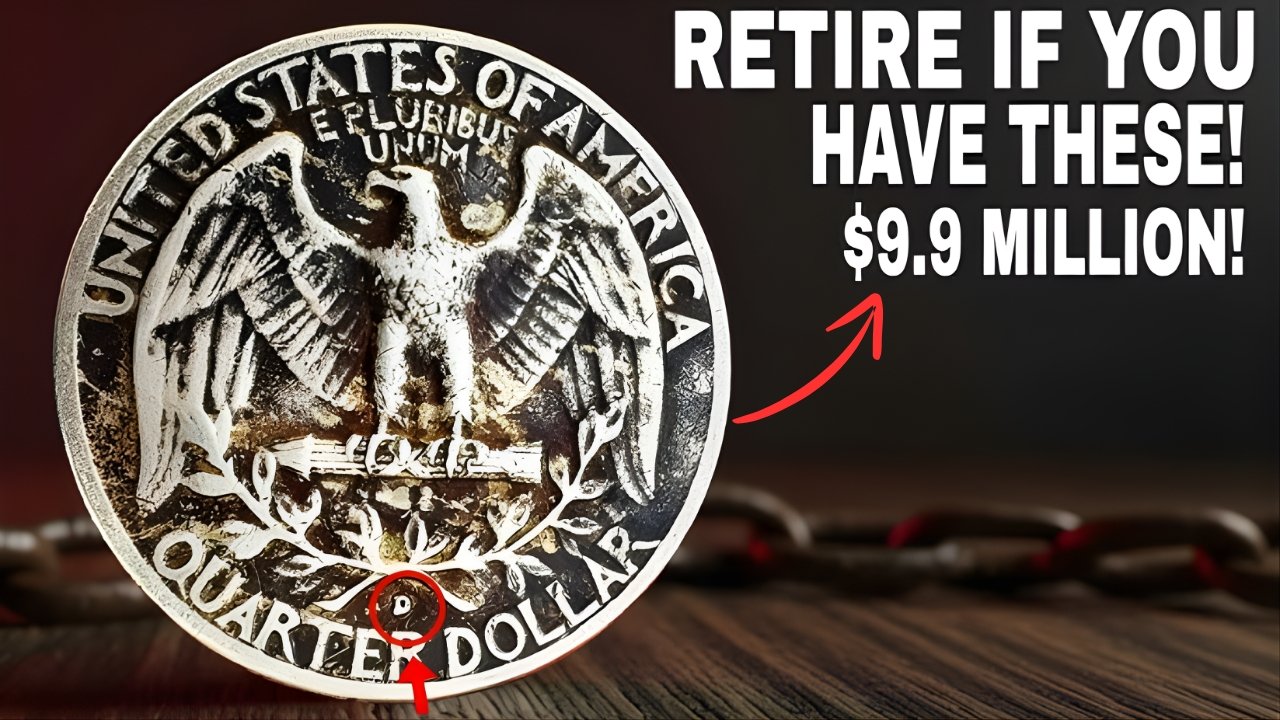
Topping want lists, the 1932-D quarter commands premiums from $250 in scruffy Fine grades to $100,000-plus for MS-67 reds.
Half a million minted in Depression-strapped Denver vanished fast into jewelry or pockets, leaving perhaps 10% extant. Recent Heritage auctions saw a gem blast past estimates, underscoring demand.
Buyers chase full “cherub” cheeks on George, sharp feather lines on the eagle. Counterfeits lurk—check weak strikes versus genuine hubs.
Even worn pieces fetch $10,000 circulated, a steal compared to rivals. Owners stash these cautiously; insurance mirrors art policies now.
1932-S: Scarcer Sibling Steals Spotlight
Matching its Denver kin in aura but rarer at 408,000 minted, the 1932-S catapults from $300 low-end to $150,000 peaks.
San Francisco’s output strained branch mint woes, yielding fewer survivors. A recent MS-66 sold for $85,000, proving condition reigns supreme.
Spot these by bolder rims, less bagmark haze. Varieties like weak “S” add allure. Family attics yield them occasionally, sparking viral TikToks of instant wealth.
Doubled Die Drama: 1942-D Delight
Wartime doubled dies mesmerize—1942-D obverse shows ghosted letters, Liberty doubled boldly. Circulated start at $50, exploding to $10,000 MS-65. Die clash scars amplify appeal, mimicking lunar craters on George’s brow.
Authenticators verify via diagnostics; fakes flood eBay. Proof-like strikes push envelopes higher.
Overmintmark Marvels: 1950-D/S Dynamo
Postwar 1950-D/S flips “D” over faint “S,” a mintmark mashup valued $500 to $25,000 pristine. Philadelphia overlooked the goof, shipping anyway.
Rarity stems from few noticed pre-melt. Magnify under light—base “S” bows peek through. Demand swells with error coin craze.
Silver ’65 Errors Shake Clad Era
1965 transitional silver quarters slipped clad lines, worth $5,000-$50,000 depending on strike quality. Philadelphia minted few before composition switch; weigh at 6.25 grams confirms. MS-67 examples dazzle auction blocks yearly.
No mintmark aids ID—clad siblings weigh 5.67 grams. These bridge eras, thrilling type collectors.
Modern Errors Ignite Fresh Hunts
2004-D Wisconsin “extra leaf” varieties—low or high—fetch $50 to $2,000, accessible rarities. Minnesota extras precede them. 1970-S Proofs struck in copper fetch $500 premiums.
Clad kings like 1982-P no mintmark whisper $100 potentials. Pocket change yields these daily.
Grading and Preservation Secrets
PCGS, NGC slabs lock values; raw coins risk dings. MS-65+ thresholds unlock multipliers—condition rarity rules quarters. Toning boosts selectively, rainbows over milk.
Store in albums away from PVC flips; humidity foes corrode silver. Annual checks prevent green rot.
Auction Trends and Investment Angles
Heritage, Stack’s Bowers move millions yearly; 2026 bids chase 1932s past $200K records. Blue sheet dealer bids lag retail 20-30%. Trump-era tariffs hike silver, buoying numismatics.
Diversify stacks—keys anchor sets. Long-term holds beat flips; patience pays dividends.
Heartland Hunters Share Jackpot Tales
Ohio grandma unearthed 1932-D in cookie jar, netting $12,000 post-auction fees. Texas dad’s change roll birthed 1950-D/S family vacation fund. Forums buzz with “just sold” brags.
Clubs mentor newbies; shows like FUN yield bargains. Social media accelerates IDs, communities verify overnight.
Market Forecasts Amid Economic Shifts
2026 projections eye 10% upticks on keys, fueled by retiree collectors and crypto refugees. Supply shrinks yearly; demographics favor heirs cashing grandma’s hoard.
Risks lurk in recessions dumping stock, but flight to quality lifts rarities. Index funds pale versus cherrypicked quarters.
Rarest Washington Quarters
Washington Quarters’ rarest gems embody American grit—from Depression scarcity to error artistry—rewarding patient hunters in 2026’s vibrant market.
Also Read this – $725 Monthly Checks Payment is come for Poor Families – Check the Criteria Here
Pocket change holds lottery tickets; attics whisper fortunes. Dive jars, chase keys, savor the thrill—numismatics turns history into wealth one coin at a time.