Optical Illusion : Staring down a wall of numbers that looks the same but isn’t?
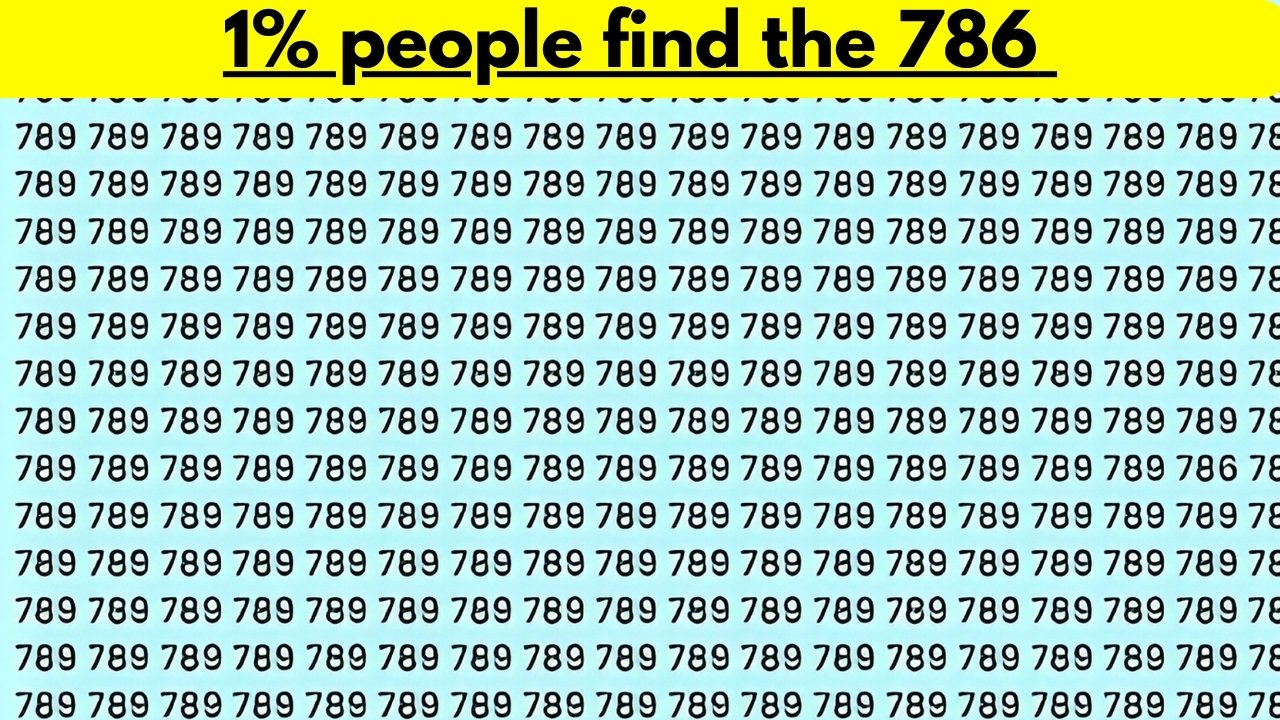
This latest optical illusion sweeping social media hides the number 786 in a massive grid of digits, and only about 1% of folks can pick it out in seconds.
It’s the kind of brain-bender that hooks you instantly, turning casual scrollers into puzzle obsessives overnight.
The Deceptive Grid Design
Imagine rows upon rows of 789s crammed together, each digit crafted with tiny tweaks to fool your eyes.
The rogue 786 lurks somewhere in the chaos, its shape blending seamlessly—maybe a slightly curved 7 or a 6 that apes a 9 just enough to vanish.
This setup plays dirty with your peripheral vision, making the oddball disappear amid the crowd.
I remember first seeing it pop up in a tech group chat while grabbing chai in Sonipat traffic. What seemed like uniform numbers at a glance turned maddening after 10 seconds of squinting.
Turns out, it’s often tucked in the lower rows, third or fourth column from the edge—patience pays off when speed fails.
How Your Brain Gets Fooled
Our minds love efficiency, chunking similar shapes into patterns without a second thought, which is exactly why this illusion wins.
The 7’s diagonal stroke merges with 8’s loops, and the 6 curls just like surrounding 9s, creating a camouflage effect psychologists call “inattentional blindness.” Add a ticking clock—say, 10 seconds—and panic sets the trap.
It’s akin to missing a motorcycle weaving through Haryana fog; focus narrows, details blur.
For content creators buried in spec sheets or SEO data, this mirrors hunting that one mismatched keyword in a sea of metrics—train your eye here, and real-world spotting sharpens too.
Proven Tricks to Beat the Puzzle
Forget random scanning; go systematic—trace columns vertically or snake through rows diagonally to break the rhythm.
Squinting helps merge subtle differences, or trace with your finger to anchor focus. Many swear by starting from the bottom; designers love stashing the prize low to dodge top-down reading habits.
After a few failed rounds, I flipped my screen 180 degrees—reshuffles the brain’s wiring, making 786 leap out like a glitch in the matrix.
Time yourself across tries: first-go averages 20 seconds for most, but pros drop to 3-4 with practice. Pair it with deep breaths to steady nerves, and you’re in the 1% club.
What Makes the 1% Elite
Sharp-eyed eagles—think photographers framing perfect bike shots or surgeons scanning for anomalies—crush this because their visual cortex fires differently.
Studies highlight stronger activity in the parietal lobe, the brain’s “where’s Waldo” HQ, letting them filter noise effortlessly. Puzzle veterans and gamers build this edge through repetition, turning instinct into superpower.
In India, these challenges explode on WhatsApp forwards and Insta stories, fueling family bets during dinner.
Auto-tech enthusiasts use them to unwind after dissecting EV battery stats or camera megapixels—spotting 786 feels like nailing a rare prototype flaw on a test ride.
Optical Illusion Viral Storm and Lasting Appeal
Kicking off early 2026, this illusion racked up crores of views across Times Now, YouTube Shorts, and Hindi reels, sparked by simple hooks like “99% fail!”
Shareability is key—tag a friend, flaunt your time, spark trash talk. Beyond fun, it combats screen fatigue, acting as micro eye-gym in our always-on lives.
Also Read This : Optical Illusion – Find the 6 in 8 only in 8 seconds
For writers crafting viral headlines, it’s a masterclass: leverage FOMO with “only 1%” claims, watch clicks surge. Whether you crack it instantly or grind it out, the win rewires confidence.
Next deadline crunch, fire it up—beats endless coffee runs and hones that hawk-like detail obsession we all chase.